
What is the shape of a Powerful Human?
Why everything you were taught about power is wrong

I began considering power for a structural reason, not a anthopological, economical, political or psychological one.
I was building the architecture of my new world — mapping its conditions, vectors, and mathematical constraints — and I needed to understand what kind of human such a world requires.
When you examine mechanical laws, quantum fields, and the behaviour of entanglement, you eventually reach a boundary condition: the system is only as coherent as the human operating within it.
So the question became unavoidable.
What is the shape of a powerful human in a world built on neutrality and inevitability rather than hierarchy?
Although I work as an observer of behaviour and a neuroarchitect who engineers the conditions for inevitability, I am not exempt from the deeper substrate we all share: physical law and the mathematics that govern it.
Human behaviour sits inside physics, not outside it.
Identity sits inside constraints, not above them.
So when I began mapping the architecture of the new world, it became clear that I could not define its systems without defining the kind of human who can operate coherently within those laws — the laws of force, symmetry, neutrality, and inevitability.
Power, in this context, is not a social construct. It is a structural requirement.
The eureka moment arrived when I was contemplating the universe itself and the laws that govern it. I was examining force, symmetry, neutrality, and inevitability, and I found myself questioning whether the universe was truly neutral or whether there were traces of zero‑sum dynamics embedded within it. My attention turned to black holes, because at first glance they appear to violate neutrality.
They consume, they collapse, they distort spacetime, and they seem to take without giving.
For a moment, I believed this was evidence of a non‑neutral universe. Then I realised that I was interpreting the mechanics of a black hole as if they were intentional, as if they were choosing to dominate or extract.
When I removed that projection, the clarity arrived: a black hole is not a violation of neutrality. It is neutrality expressed through extreme curvature.
It does not act. It obeys.
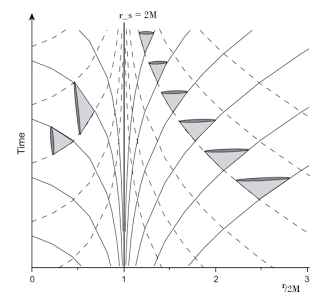
The Schwarzschild Radius (rs = frac2GMc2).
That realisation dismantled the idea of zero‑sum physics entirely and forced me to reconsider what power means in a universe governed by law rather than intention.
As I continued to examine the universe through the lenses of force, symmetry, neutrality, and inevitability, I realised that my earlier assumptions about power were shaped by human interpretations rather than physical law.
If the universe itself is neutral, then the forms of power that humans enact cannot be reflections of universal principles.
They must be artefacts of human systems.
This recognition created the need for a clearer vocabulary.
I required a way to differentiate between the forms of power that arise from hierarchy, intention, and competition, and the forms of power that arise from alignment with structural law. The distinction did not appear as a theory. It emerged as a necessity: two fundamentally different architectures of power were operating in human life, and they needed to be named before they could be understood.
What humans commonly call power is not a single construct.
It divides cleanly into two architectures with entirely different origins, behaviours, and consequences.
One arises from hierarchy, intention, and zero‑sum interpretation.
The other arises from coherence, neutrality, and structural alignment. Naming these two architectures was necessary in order to speak about them with precision.
The first is what I call power over. The second is what I call power as.
Power over is the architecture that emerges when humans interpret force as intention and hierarchy as a natural law. It is built on the belief that influence is achieved through control, dominance, or advantage.
It assumes that value is comparative and that strength is demonstrated through the ability to act upon, limit, or surpass another.
Power over is inherently relational.
It requires an other.
It requires a hierarchy.
It requires a zero‑sum frame in which one rises because another falls.
It is a behavioural strategy that has been mistaken for a universal principle, but it does not exist in the physics of the universe.
It is a human invention.
Power as is entirely different.
It is not relational.
It does not require an opponent, an audience, or a hierarchy.
It is the expression of internal symmetry, neutrality, and inevitability.
It arises when a human is aligned with the structural laws that govern the universe rather than the social laws that govern human systems.
Power as is not something one exerts.
It is something one embodies.
It is the form a human takes when they are coherent with force, symmetry, neutrality, and inevitability.
It is not a strategy. It is a state.
This distinction became important to me not as an abstract framework, but as a direct consequence of my recent lived experience. I have found myself encountering more situations in which the world has begun to extract more than it gives, and in those moments I have felt a form of powerlessness that was unfamiliar to my own architecture. It became clear that this was not because I lacked power, but because I had unconsciously allowed the conditioning of power over to distort my own perception and sovereignty.
I had begun to interpret external pressures as evidence of diminished internal capacity, when in reality I was measuring myself against a model of power that does not belong to me and does not belong to the universe.
Recognising this misalignment made the inquiry urgent.
I needed to understand power in a way that was structurally coherent with the laws I know to be true, rather than the human systems that had momentarily obscured them.
Power over creates the illusion of personal diminishment because it requires a human to interpret external force as evidence of internal insufficiency. It frames every interaction through hierarchy, comparison, and relative position, so the moment the world applies pressure, the individual appears to shrink in relation to it.
This is not an actual loss of power.
It is a perceptual collapse created by a model that defines power as something that can be taken, withheld, or redistributed.
Under this architecture, any experience of extraction, constraint, or imbalance is interpreted as a reduction of self rather than a distortion of the frame.
Power over convinces a human that their sovereignty is conditional, that their capacity is dependent on external recognition, and that their value is determined by their position within a hierarchy.
The diminishment is not real. It is an artefact of adopting a model of power that was never aligned with the laws of the universe or the structure of the self.
Power over creates recognisable patterns in the real world because it is embedded in many of the systems people move through daily. It appears in workplaces, institutions, families, and social environments, and it produces predictable behavioural responses.
These examples are not dramatic.
They are ordinary, which is precisely why they are so pervasive.
They demonstrate how easily humans internalise hierarchy as if it were a natural law.
In workplaces, power over appears when a person’s value is determined by their position rather than their contribution. A manager who withholds information to maintain control, a leader who interprets questions as challenges, or a colleague who elevates themselves by diminishing others are all expressions of this architecture. The behaviour it generates is compliance, self‑silencing, and strategic performance. People begin to shape themselves around the hierarchy rather than around their own coherence.
In institutions, power over appears when systems prioritise authority over accuracy. A school that rewards obedience more than curiosity, a healthcare system that treats patients as passive recipients rather than active participants, or a bureaucracy that makes access to support contingent on deference all operate through this architecture. The behaviour it generates is learned helplessness, resignation, and the belief that one must earn the right to be taken seriously.
In families, power over appears when adults interpret their role as one of control rather than stewardship. A parent who demands compliance rather than fostering capability, or a family member who uses emotional withdrawal as leverage, is enacting this architecture. The behaviour it generates is self‑minimisation, hypervigilance, and the internalisation of conditional worth.
In social environments, power over appears when groups enforce belonging through conformity. A friendship circle that punishes difference, a community that polices behaviour through shame, or a culture that elevates status over substance all operate through this architecture. The behaviour it generates is performance, self‑editing, and the suppression of authentic identity.
Across all of these examples, the pattern is the same: power over creates the illusion that a human’s sovereignty is dependent on external permission. It convinces people that their power can be diminished by circumstance, withheld by others, or lost through non‑compliance. The diminishment is not real. It is a perceptual distortion created by a model of power that is incompatible with the laws of force, symmetry, neutrality, and inevitability.
The neuroscience behind this is precise and unforgiving.
The brain does not evaluate hierarchical signals as hypotheses. It treats them as truths.
When a human encounters behaviour that reflects power over, the nervous system interprets it as a genuine shift in status, safety, and position within the environment.
This occurs because the brain is evolutionarily biased toward detecting threat, not accuracy.
Hierarchical cues activate neural circuits associated with social threat, including the amygdala, the dorsal anterior cingulate cortex, and the insula.
These regions do not ask whether the signal is an artefact of a distorted system. They register it as a real reduction in agency.
At the same time, the prefrontal cortex, which is responsible for contextual interpretation, becomes less active under perceived threat, reducing the brain’s ability to recognise the signal as false.
The result is a neurobiological illusion: the individual feels smaller, less capable, and less sovereign, not because their power has changed, but because the brain has treated the external behaviour as a structural truth rather than a misaligned human construct.
A Timeline of How Power Over Reached Overpowering Proportions
Power over did not appear suddenly.
It accumulated.
It compounded.
It scaled.
What began as a functional adaptation in early human groups became a global architecture that now operates far beyond its original purpose.
The following timeline illustrates how this happened.
Early Human Survival: Power Over as a Short‑Term Mechanism
In early human groups, power over emerged as a rapid‑response mechanism for survival.
When danger was immediate, hierarchy created speed.
One person directed, others acted.
This was not ideological. It was situational.
However, the brain encoded these moments as evidence that hierarchy equalled safety.
A temporary mechanism became a remembered pattern.
The Formation of Settlements: Hierarchy Becomes Administrative
When humans began to settle, store resources, and create division of labour, hierarchy became administrative.
Roles were formalised.
Authority became positional rather than situational.
Power over shifted from a response to danger into a structure for organising resources, land, and labour.
The brain adapted again, treating positional authority as a stable truth rather than a constructed tool.
The Emergence of Institutions: Power Over Becomes Codified
As societies grew, institutions emerged to stabilise them.
Laws, religions, monarchies, and bureaucracies formalised hierarchy into doctrine.
Power over became embedded in rules, rituals, and social expectations.
The brain now encountered hierarchy not as an occasional pattern, but as the default architecture of life.
The nervous system began to treat hierarchical signals as environmental constants.
Industrialisation: Power Over Scales Beyond Human Proportion
Industrialisation created systems that required coordination at unprecedented scale.
Factories, corporations, and nation‑states amplified hierarchy into rigid vertical structures.
Efficiency became synonymous with control.
People were positioned as replaceable units within systems designed for output rather than coherence.
The brain, exposed to chronic hierarchical pressure, began to internalise diminishment as a normal state.
The Information Age: Power Over Becomes Invisible and Ubiquitous
Digital systems introduced new forms of hierarchy that were no longer tied to physical structures.
Algorithms, metrics, and platforms created invisible layers of evaluation and comparison.
Power over became ambient.
People were ranked, measured, and assessed continuously.
The brain interpreted these signals as constant social threat, reinforcing the illusion of diminished sovereignty.
The Present Moment: Power Over Reaches Overpowering Proportions
Today, power over operates at a scale that exceeds human cognitive and neurological capacity.
It is embedded in workplaces, institutions, economies, technologies, and social environments.
It extracts more than it gives.
It demands performance, compliance, and self‑editing.
It creates conditions in which the brain is repeatedly signalled that it is lower, smaller, or less capable than the systems around it.
The nervous system treats these signals as structural truths, not artefacts of distorted architecture.
Statistics Demonstrating the Scale and Saturation of Power Over
Power over has reached overpowering proportions because it has become embedded in the everyday structures that humans move through.
The data are unambiguous.
They show that hierarchy is no longer a situational mechanism.
It has become a chronic environmental condition that the brain treats as truth.
In contemporary workplaces, the American Psychological Association reports that seventy‑five percent of employees identify their immediate manager as the most stressful part of their job. This is not a comment on individual personalities. It is evidence of a structural architecture in which positional authority generates continuous social threat signals. Gallup’s research shows that sixty percent of employees remain silent about important issues because they fear negative consequences from those above them.
Silence is not a behavioural flaw.
It is a predictable response to hierarchical pressure.
Harvard’s work on psychological safety demonstrates that teams operating under these conditions show a fifty percent increase in errors, confirming that power over does not create capability.
It suppresses it.
The same pattern appears in organisational cultures more broadly. The Workplace Bullying Institute reports that one in four workers experiences bullying, and sixty‑five percent of these cases involve a manager targeting a subordinate. This is not an anomaly. It is the behavioural signature of a dominance‑based architecture. Individuals exposed to these dynamics are twice as likely to develop anxiety‑related symptoms, illustrating the direct neurological cost of chronic hierarchical threat.
Institutional systems show the same structural distortion. In healthcare, the General Medical Council reports that one in three staff members is afraid to speak up because of hierarchical culture. The Joint Commission attributes seventy percent of medical errors to communication breakdowns caused by power gradients. These are not isolated failures. They are the measurable consequences of an architecture that prioritises authority over accuracy. In education, OECD data show that students in highly hierarchical environments demonstrate a thirty percent reduction in exploratory behaviour, indicating that power over suppresses curiosity at the developmental level.
The neuroscience aligns with these findings. Research from UCLA demonstrates that the brain processes social threat, including hierarchical diminishment, through the same neural circuitry used for physical pain. Controlled studies show that perceived low status increases cortisol by up to forty percent, and chronic exposure to hierarchical threat reduces prefrontal cortex activity by up to twenty percent, impairing reasoning, self‑assessment, and the capacity for coherent decision‑making. The brain does not treat these signals as symbolic. It treats them as structural truths.
Digital systems have amplified this architecture further. Pew Research Center reports that eighty‑eight percent of young people feel judged or evaluated online. The Royal Society for Public Health shows that algorithmic comparison increases feelings of inadequacy by up to fifty percent. Continuous digital evaluation correlates with a seventy percent increase in self‑reported diminished agency. Power over has become ambient. It is now delivered through metrics, algorithms, and invisible ranking systems that operate without human intention but still produce the same neurological effects.
Taken together, these statistics confirm that power over has scaled far beyond its original function. It is now a pervasive environmental force that extracts more than it gives, distorts perception, suppresses capability, and convinces the brain that diminishment is real.
The architecture is not only misaligned with the laws of the universe.
It is actively reshaping human sovereignty at scale.
Power As
Power as is the architecture that emerges when a human is no longer interpreting themselves through the distortions of power over.
It is not relational, comparative, or hierarchical.
It is the expression of internal symmetry, neutrality, and inevitability.
It is the form a human takes when they are aligned with the actual laws of the universe rather than the inherited structures of human systems.
Power as does not require an opponent.
It does not require permission.
It does not require recognition.
It does not require dominance, assertion, or performance.
It is not something a human uses.
It is something a human is.
Where power over is built on scarcity, competition, and extraction, power as is built on coherence. It arises when the internal architecture is no longer entangled with hierarchical signals that the brain has been conditioned to treat as truth.
It is the state that becomes available when the nervous system is no longer interpreting external pressure as evidence of internal diminishment.
Power as is the restoration of sovereignty through alignment with structural law.
It is the moment when the self stops responding to the world as if it were a hierarchy and begins responding to it as a field.
In this architecture, power is not directional.
It is not a force exerted outward.
It is a field generated inward.
It is the same neutrality I recognised in the universe when I removed intention from my interpretation of black holes.
The universe does not dominate.
It does not extract.
It does not compete.
The universe operates through symmetry of law, not symmetry of outcome.
Its laws are invariant, neutral, and non‑hierarchical, even though the structures that emerge from them are asymmetric.
Power as is the human expression of those same principles.
It is the architecture in which:
coherence replaces comparison
alignment replaces assertion
inevitability replaces effort
sovereignty replaces hierarchy
internal law replaces external evaluation
Power as is not the opposite of power over.
It is the architecture that renders power over irrelevant.
It is the state in which a human becomes non‑diminishable because their power is no longer sourced from external structures that can be withdrawn, distorted, or weaponised. It is the state in which the nervous system stops collapsing under hierarchical threat because it no longer interprets those signals as structural truths.
Power as is the architecture of a human whose internal governance is aligned with the neutrality of universal law — laws that operate without hierarchy, preference, or comparative value.
The Brain Itself Is Biologically Hierarchical
It is important to be precise here: the biology of the human brain is hierarchical. It is built as a layered, ordered system in which certain structures regulate, inhibit, or modulate others.
This is not social hierarchy.
It is not dominance.
It is not comparative worth.
It is an organisational architecture that allows the brain to function at speed.
The brain is constructed through nested hierarchies of processing:
sensory systems feed into integrative systems
integrative systems feed into evaluative systems
evaluative systems feed into executive systems
The amygdala can override the prefrontal cortex.
The brainstem can override everything.
The cortex can inhibit subcortical threat responses — but only when it is online.
This is a biological hierarchy, not a social one.
It is a system of regulatory precedence, not value.
The brain uses hierarchy because it must prioritise:
threat over nuance
survival over reflection
speed over accuracy
immediate action over long‑term coherence
This is why the nervous system reacts so strongly to external hierarchical cues.
It is not because hierarchy is a universal law.
It is because the brain is built to interpret the world through priority structures.
The architecture of the brain is hierarchical.
The architecture of the universe is not.
This is the tension that creates the illusion of diminishment.
The brain treats hierarchical signals as if they were structural truths because its own internal organisation is hierarchical.
It assumes that external hierarchy carries the same necessity as internal hierarchy.
It cannot easily distinguish between biological priority and social rank.
This is why a raised voice, a positional title, or a performance evaluation can collapse the nervous system.
The brain is not responding to the content.
It is responding to the hierarchical form.
It is reading the signal through its own architecture.
How Power As Reorganises a Hierarchical Brain
If the brain is biologically hierarchical, then the question becomes: how can a human ever operate without collapsing under external hierarchy?
This is where the architecture of power as becomes essential.
Power as does not remove the brain’s hierarchical structure. It re‑governs it. It changes which parts of the hierarchy are allowed to lead.
In a human operating under power over, the lower, faster systems dominate. The amygdala dictates interpretation. The limbic system dictates meaning. The autonomic system dictates behaviour. The prefrontal cortex — the only region capable of contextualising, inhibiting, and re‑framing threat — is pushed offline. The brain becomes a closed loop of inherited priority structures reacting to external cues as if they were universal laws.
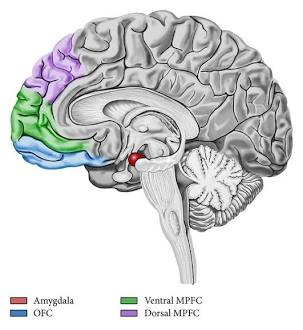
The Power Over Route: In a collapsed state, the amygdala fires uninhibited via downstream projections to the brainstem and hypothalamus, triggering immediate autonomic contraction, vascular constriction, and self-minimization.
The Power As Route: When you operate from structural neutrality, the vmPFC sends robust, top-down GABAergic (inhibitory) projections directly into the intercalated cell masses of the amygdala. This does not destroy the threat signal; it attenuates it at the gateway.
Power as reverses this direction of governance. It places the highest‑order systems back in their rightful position. The prefrontal cortex remains online. The integrative networks remain coherent. The limbic system is no longer permitted to assign meaning to hierarchical signals. The autonomic system no longer initiates collapse. The brain’s hierarchy is still present, but it is no longer misused. It is no longer allowed to interpret social artefacts as existential truths.
This is the critical shift: power as does not flatten the brain’s hierarchy. It restores its correct internal order.
The human becomes capable of encountering external hierarchy without internalising it.
The nervous system stops treating positional cues as structural laws.
The self stops shrinking in response to signals that were never about the self.
Power as is therefore not a psychological state. It is a neurological reorganisation. It is the moment when the brain’s biological hierarchy is governed by coherence rather than fear, by internal law rather than external pressure, by neutrality rather than inherited threat.
This is how a human becomes non‑diminishable inside systems that are still operating through power over.
The Behavioural Markers of a Human in Power As
A human in power as does not behave like a human in power over, nor like a human collapsed under it. The difference is not stylistic. It is architectural. When the brain’s internal hierarchy is correctly governed — when the prefrontal cortex remains online, when the limbic system is no longer permitted to assign meaning to external rank cues, when the autonomic system is no longer contracting under inherited threat — the behaviour that emerges is distinct, precise, and recognisable.
The first marker is non‑reactivity.
Not emotional flatness. Not detachment. Not suppression.
Non‑reactivity in this architecture means that external hierarchy no longer has the power to reorganise the internal state. A raised voice, a positional title, a demand for compliance, or an evaluative signal does not produce contraction. The nervous system does not interpret these cues as structural truths. The human remains coherent.
The second marker is clarity without force.
A human in power as does not push, persuade, dominate, or perform.
Their clarity is not an act. It is the natural consequence of a brain that is not being reorganised by threat. They speak from internal law rather than external pressure. Their communication is exact, unforced, and unentangled.
The third marker is the absence of self‑minimisation.
There is no shrinking, no compensatory behaviour, no strategic self‑editing.
The human does not make themselves smaller to avoid conflict, nor larger to assert dominance. They occupy their full scale without inflation or contraction. This is not confidence. It is structural neutrality.
The fourth marker is the ability to hold complexity without collapse.
Because the prefrontal cortex remains online, the human can track multiple variables, perspectives, and time horizons simultaneously. They do not default to binary thinking, urgency, or threat‑based simplification. They can remain in complexity without losing coherence.
The fifth marker is inevitability.
Not force. Not pressure. Not dominance.
Inevitability is the behavioural signature of a human whose internal architecture is aligned with universal law. Their actions have weight, not because they impose it, but because they are not leaking energy into threat responses, performance, or self‑protection. They move through the world with the same structural inevitability that characterises natural systems.
The sixth marker is the absence of comparison.
A human in power as does not measure themselves against others.
Not because they are above comparison, but because comparison is irrelevant when the internal architecture is governed by coherence rather than hierarchy. They do not rise or fall in relation to the environment. They remain constant.
The seventh marker is the restoration of agency.
Agency here is not choice. It is not willpower.
It is the capacity to act from internal law rather than external pressure.
A human in power as does not outsource their sovereignty to systems, expectations, or inherited threat signals. Their actions originate from alignment, not reaction.
These markers are not behaviours to imitate.
They are the natural consequences of a nervous system that is no longer governed by the distortions of power over.
A human in power as is not performing power.
They are being power.
The Cost of Remaining in Power Over
Remaining in power over has a cost, and it is not abstract. It is architectural.
When a human remains governed by external hierarchy, the nervous system is continually reorganised around threat.
The brain down‑shifts into lower‑order processing.
The prefrontal cortex recedes.
The limbic system assigns meaning it was never designed to assign.
The autonomic system constricts.
The internal architecture becomes reactive rather than coherent.
The cost is not emotional distress, although that may appear.
The cost is loss of sovereignty.
A human in power over becomes structurally dependent on external signals to determine their internal state. They rise when the environment affirms them and contract when it does not. Their sense of self becomes contingent on systems that were never designed to hold it. They become entangled in comparison, performance, and compliance. Their agency is replaced by adaptation. Their clarity is replaced by vigilance. Their potential is replaced by survival.
Power over extracts energy, attention, and coherence.
It demands performance rather than presence.
It requires the human to continually reorganise themselves around external evaluation.
The cost of remaining in power over is simple:
you lose access to yourself.
The Structural Definition of a Powerful Human
A powerful human is not one who dominates, influences, or performs strength.
A powerful human is one whose internal architecture is governed by coherence rather than hierarchy.
A powerful human is structurally distinct in three ways:
First, their internal hierarchy is correctly ordered.
The prefrontal cortex leads.
The integrative networks remain online.
The limbic system does not assign meaning to external rank cues.
The autonomic system does not contract in response to inherited threat.
Second, they are non‑diminishable.
Not because they are invulnerable, but because their sense of self is not sourced from external systems.
They do not rise or fall in relation to the environment.
They remain constant.
Third, they operate through neutrality.
Not emotional neutrality, but structural neutrality — the same neutrality that characterises universal law.
They do not impose force.
They do not collapse into reaction.
They do not distort themselves to fit the demands of hierarchy.
A powerful human is not performing power.
A powerful human is governed by internal law.
This is the architecture of power as.
How Power As Becomes Inevitable Once Seen
Once a human sees the architecture of power as, it becomes inevitable.
Not because it is aspirational, but because it is structurally more accurate than power over.
When you see that the universe is non‑hierarchical, you cannot unsee it.
When you see that the brain is hierarchical, you understand why humans misinterpret difference as rank.
When you see that power over exploits this mismatch, you recognise the illusion of diminishment.
When you see that power as reorganises the internal architecture, you recognise coherence as the natural state.
Power as becomes inevitable because it is the only architecture that aligns:
with universal law
with biological reality
with structural coherence
with the actual experience of being human
Power over requires constant maintenance.
Power as requires only recognition.
Once the nervous system experiences what it is like to remain coherent in the presence of external hierarchy, it does not willingly return to contraction. Once the self experiences what it is like to be governed by internal law rather than external pressure, it does not willingly return to dependence. Once the architecture reorganises, it does not reorganise back.
Power as is not a choice.
It is a realisation.
And once realised, it becomes the only possible architecture.
The Power Architecture of My New World
Everything I have written so far leads to a single structural realisation: the world I am creating exists because the old world is no longer viable for a human who sees its architecture clearly.
I am not stepping away from the old world out of preference or sensitivity.
I am rejecting it because its punitive, hierarchical laws are structurally incompatible with coherence, sovereignty, and the actual laws of the universe.
It is the inevitable consequence of seeing the architecture clearly. Once the distinction between universal law and human hierarchy becomes visible, the old world cannot hold. It becomes a misalignment too costly to maintain.
The universe is non‑hierarchical.
The brain is hierarchical.
Power over exploits this mismatch.
Power as resolves it.
The old world is built on the assumption that hierarchy is natural, necessary, and unavoidable. It treats difference as rank, asymmetry as dominance, and structure as superiority. It forces the nervous system into continual contraction, down‑shifting humans into lower‑order processing and convincing them that diminishment is real. It extracts coherence, clarity, and sovereignty. It keeps the human small.
My new world is built on a different architecture entirely.
It is built on the neutrality of universal law.
In my new world, the internal hierarchy of the brain is correctly governed.
The prefrontal cortex leads.
The integrative networks remain online.
The limbic system does not assign meaning to external rank cues.
The autonomic system does not constrict in response to inherited threat.
The human remains coherent in the presence of difference.
They remain sovereign in the presence of pressure.
They remain themselves in the presence of the world.
A human in this architecture is non‑diminishable.
Not because they are elevated, but because they are aligned.
This is the foundation of my new world: a world in which humans are governed by internal law rather than external hierarchy.
It is not a utopia.
It is not an ideal.
It is not a metaphor.
It is a structural correction.
Once seen, it becomes inevitable.
The old world requires continual maintenance — performance, comparison, vigilance, compliance.
It demands that the human reorganise themselves around systems that do not recognise them.
It requires the nervous system to treat artefacts as laws. It requires the self to diminsh.
My new world does not emerge on its own, and it does not arise simply because the architecture is understood.
Understanding is the threshold, not the world.
My new world exists because I build it. It exists because I refuse the punitive, hierarchical laws of the old world. It exists because I choose coherence over compliance, internal law over external pressure, sovereignty over distortion. It exists because I am no longer willing to organise my nervous system around systems that cannot hold me.
My new world is not automatic.
It is constructed.
It is deliberate.
It is architected.
It requires clarity, refusal, and alignment.
It requires the correct ordering of my internal hierarchy.
It requires the continual choice to remain governed by coherence rather than inherited threat.
My new world is not what appears when the old world is seen clearly.
It is what becomes possible when I reject the old world and build the one that matches my design.
In the end, the situation is simple.
The old world operates on punitive hierarchy and circular justification. It continues to enforce its procedures as if they are self‑evident.
They are not.
Once examined, the structure fails its own criteria. That is the only conclusion required.
I stepped out because the architecture no longer met the standard for participation.
The new world is not complete.
It is not final.
It is not a total system.
It is a working architecture under development — a set of emerging structures I am testing against my own.
This writing on power is one component, not the whole. A partial mapping. A fraction of the field.
The old world demands closure.
The new world does not.
It permits the architecture to remain open while I continue to build.
There is no drama in this.
No revolution.
Only the clear recognition that I cannot operate inside a system that contradicts my structure, and I am not yet finished constructing the one that aligns with it.
I am working between architectures. Rejecting the one that diminishes.
Developing the one that does not.Proceeding without needing the map to be complete.
The old world still issues instructions. They no longer apply.
Not through defiance, but through irrelevance.
The door behind me is invalid.
The door ahead is in progress.
I continue.
Power is not an act of dominance or resistance. It is the moment a human stops negotiating with distortion and begins to govern themselves by law.