

From 1 August until 10 September, we enter a season shaped by real environmental and circadian shifts: the softening of morning light, the cooling of dawn, the quieting of humidity, and the lunar cycle’s gradual pull inward.
This arc is not symbolic; it is biological.
It marks a period where the nervous system naturally seeks gentleness, coherence, and refuge. In these weeks, neuroscience becomes profoundly human—showing us how light, air, temperature, and rhythm shape our capacity to think, feel, and remain whole.
This is why becoming sanctuary matters now: because in a world defined by acceleration and overload, the brain requires intervals of softness to repair, integrate, and remember itself.
This arc is an invitation to inhabit that gentleness, to align with the season’s quiet intelligence, and to let the environment teach us how to be human again.
Context & Environmental Alignment
Threshold Light: The first perceptible softening of morning light in early August reduces visual intensity and lowers circadian arousal.
Waning Crescent: A lunar phase associated with inwardness, reflection, and reduced external drive.
Circadian Downshift: After July’s overstimulation, the nervous system naturally transitions into a quieter, more receptive mode.
These environmental conditions create a biologically coherent moment for sanctuary, reflection, and cognitive integration.
Core Themes of the Piece
Softening as Biology, Not Metaphor: The script emphasises that the shift into gentleness is a physiological response to environmental change.
Neuroscience as Human Science:
Neuroscience is framed as the study of how humans become themselves.
It is positioned as the most human of sciences because it examines perception, emotion, meaning, adaptation, and connection.
The brain is described not as a machine but as a landscape shaped by environment, relationship, and story.
Environmental Influence on the Nervous System:
Light, temperature, humidity, and pressure directly influence cognitive clarity and emotional bandwidth.
The waning crescent + threshold light combination creates a natural sanctuary state.
Why Sanctuary Is Necessary Now
Overload: Modern systems, environments, and social conditions generate chronic acceleration and sensory saturation.
Neural Limits: The nervous system cannot sustain continuous high‑intensity input without degradation.
Sanctuary as Repair:
Sanctuary is not withdrawal; it is a deliberate creation of conditions that allow neural settling, coherence, and clarity.
It is a counterbalance to tumultuous external conditions.
Key Takeaways
The environment is already inviting a softer mode of being.
Neuroscience validates the need for sanctuary as a biological requirement, not a luxury.
Becoming sanctuary is an act of coherence, repair, and human alignment.
This date—1 August—is a natural threshold for beginning.
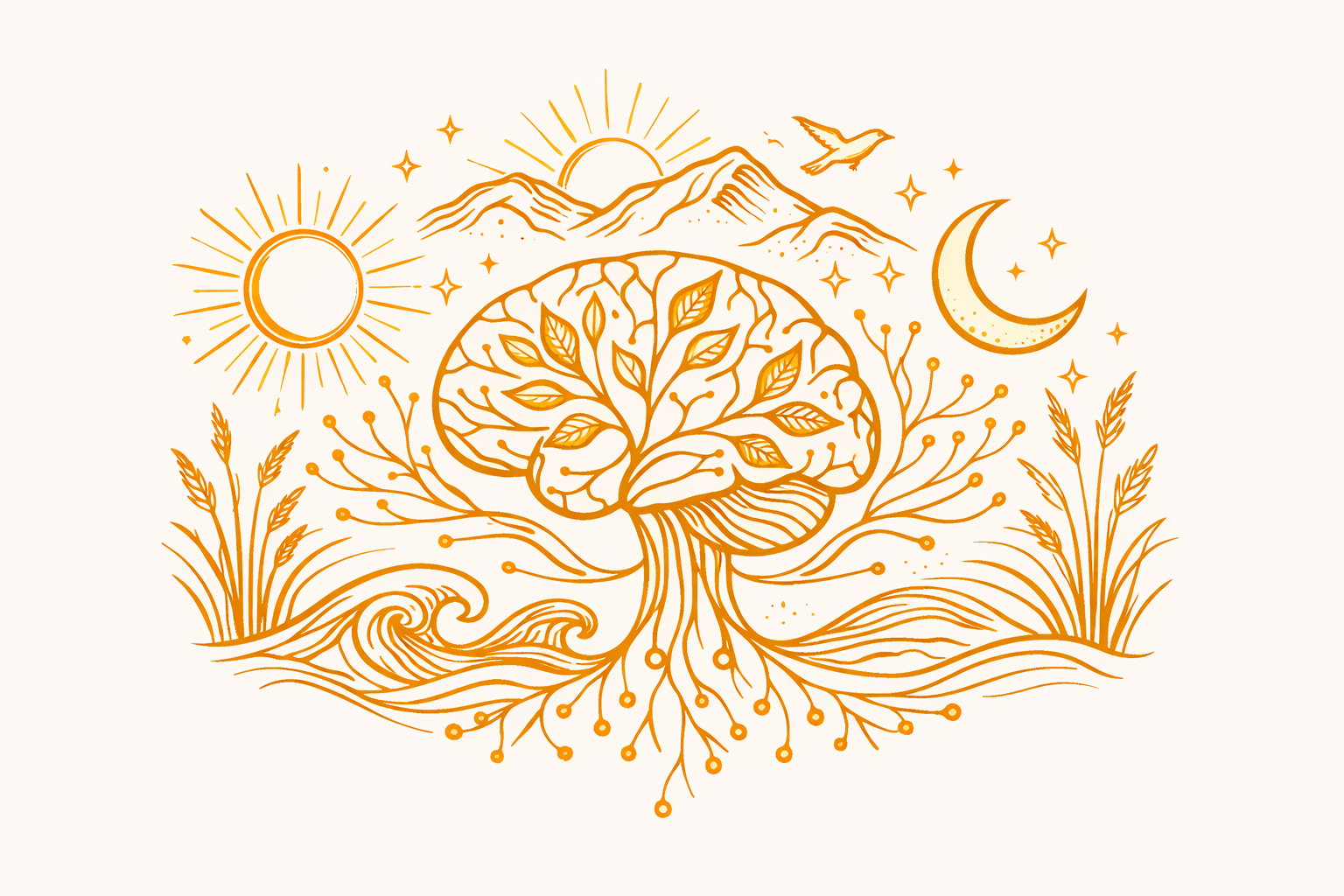
Neuroscience reminds us that the brain is not a fortress but a field—alive, porous, and shaped by light. When we soften, we do not retreat; we return to coherence. Sanctuary is the nervous system remembering its own rhythm.


