

Containment is the structural condition that allows the nervous system to reorganise. It provides stability, reduces noise, and creates the predictable frame required for deeper neural circuits to engage.
Neuroscience Basis
Stability is the precondition for plasticity.
Excess input keeps the brain in reactive, high‑cost processing.
Containment reduces cognitive load and increases integrative capacity.
Boundaries lower threat detection and restore executive control.
Predictable rhythms strengthen regulatory circuits and signal safety.
Functional Purpose
Containment narrows the field so the system can access its own architecture.
It is not restriction — it is optimisation.
Key Mechanisms
Boundaries: Define what is inside the frame and what is outside it.
Rhythm: Repetition stabilises neural pathways and reduces uncertainty.
Reduction: Removing stimulation exposes underlying patterns.
Visibility: The brain cannot reorganise what it cannot see.
What Containment Enables
Down‑regulation of vigilance
Increased clarity and pattern recognition
Access to deeper processing networks
Energy conservation and reallocation
Conditions for identity‑level reorganisation
Why It Feels Tough
Containment removes the noise that once masked discomfort.
It reveals what has been avoided.
This exposure is essential for structural change.
Core Principle
Containment is not the end of movement.
It is the neurological foundation that makes meaningful transformation possible.
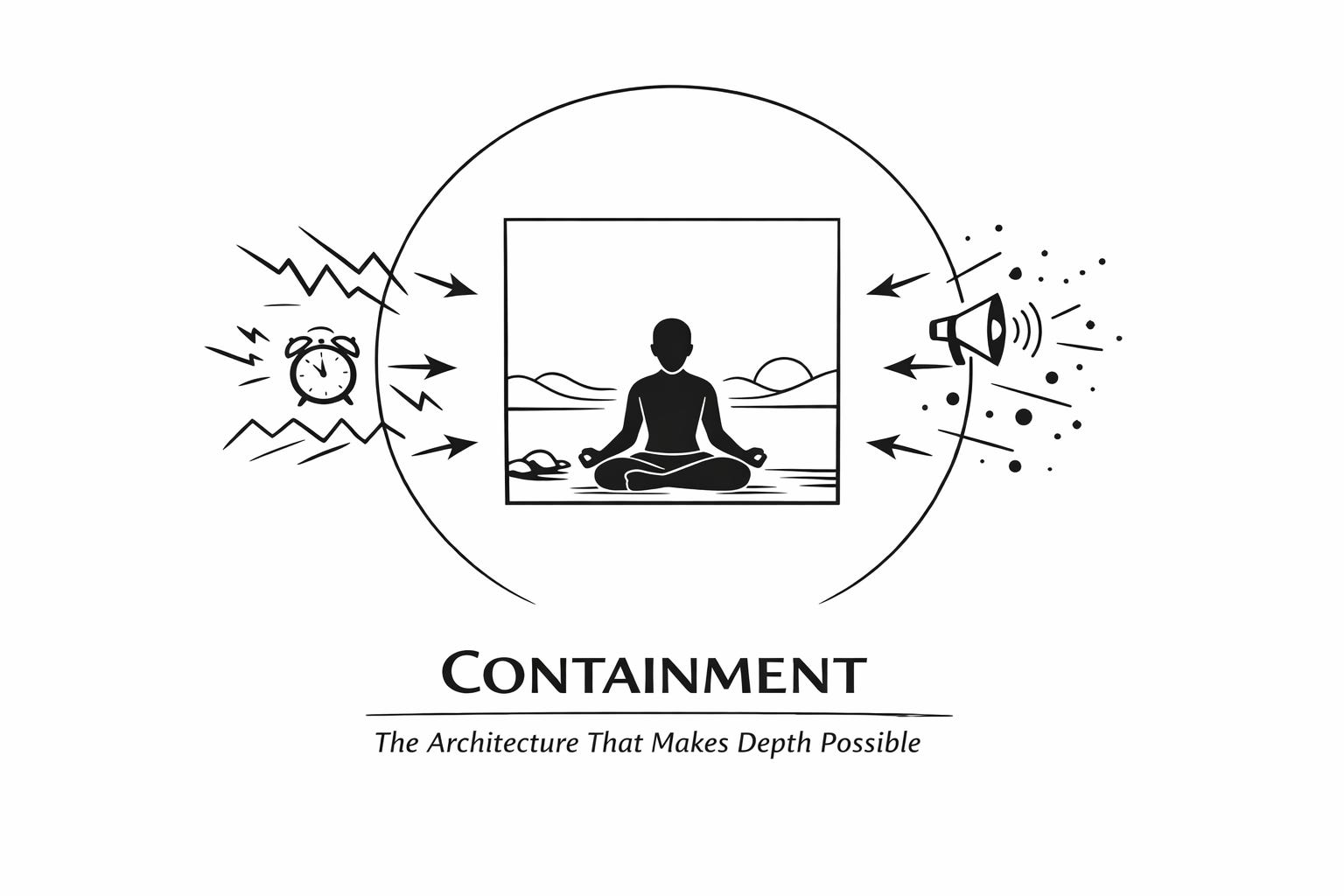
Containment is the nervous system’s architecture of truth. When the field is narrowed and rhythm holds, the brain stops defending and begins to reorganise. Stability is not stillness — it is the structure through which transformation becomes possible.


