

Every person carries an internal architecture—a structural blueprint of values, thresholds, sensitivities, and the nervous system’s deep logic. Alongside this, each person inherits an external architecture—the social, cultural, institutional, and relational structures that pre‑exist them. Distortion arises when these two architectures are misaligned.
Key Concepts
Internal Architecture
The innate structural design of a person.
Includes perceptual apertures, nervous system patterning, ethical orientation, and capacity for complexity.
Not psychological decoration; it is the load‑bearing structure of the self.
External Architecture
The inherited world: institutions, norms, expectations, and systems.
Built to privilege certain configurations of personhood while constraining others.
Often accidental, outdated, or indifferent to individual variation.
Misalignment as Distortion
Distortion is not personal failure; it is structural incompatibility.
Symptoms arise when the external architecture demands shapes the internal structure cannot ethically or physiologically assume.
The nervous system becomes the site where the conflict is registered, not the source of the problem.
Why This Distinction Matters
It reframes overwhelm, collapse, and “malfunction” as structural consequences, not personal deficits.
It restores agency by locating the problem in the architecture, not the individual.
It clarifies that adaptation is not always integrity; sometimes it is distortion.
It opens the possibility of building environments that can actually hold the person as they are.
The work is not to shrink the internal architecture to fit the inherited world, but to build a world capable of holding the truth of the person.
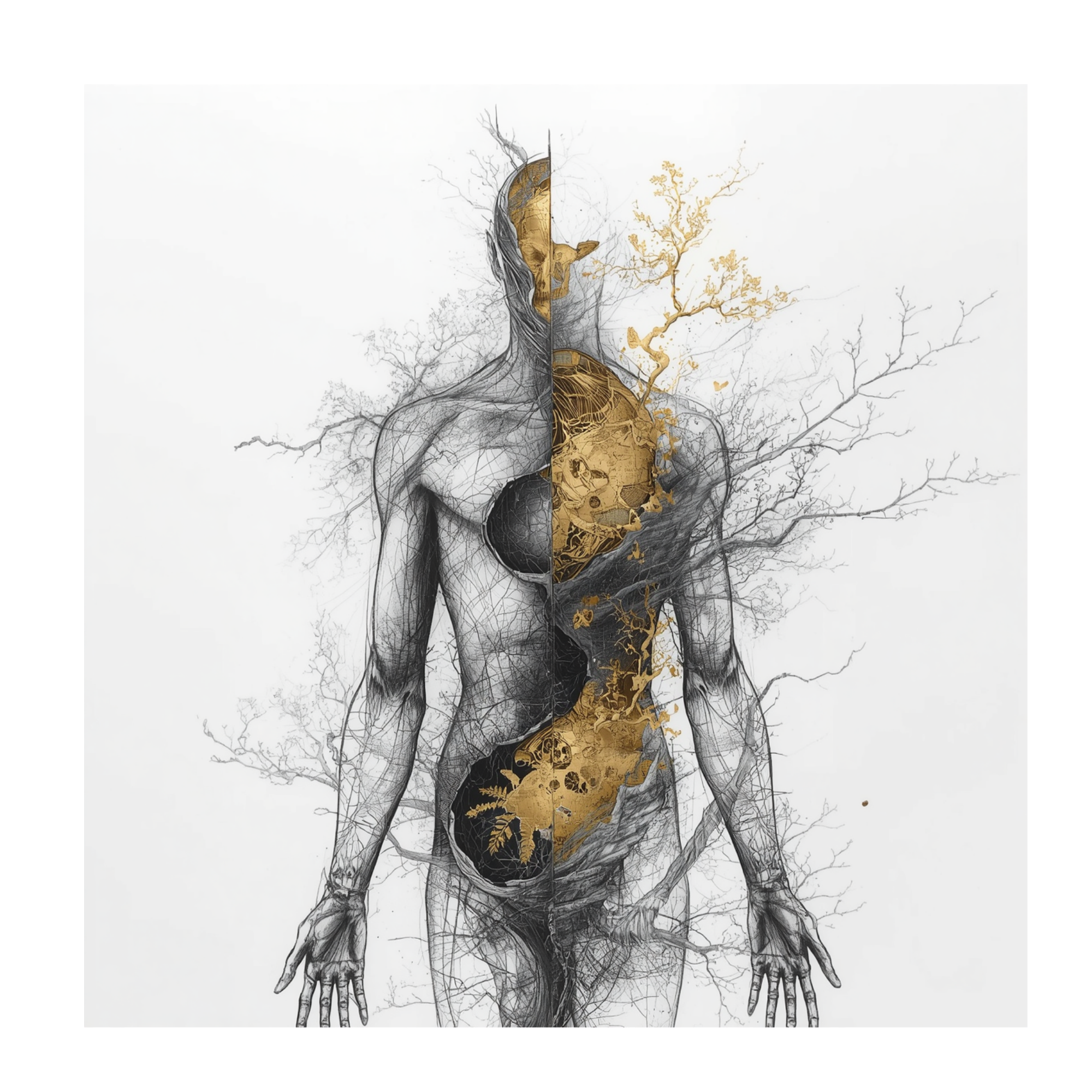
The world does not misunderstand you; it simply refuses to recognise any architecture it did not build.


